Conversion Bench
- Product review placements for online stores: 6 UK services compared
Six UK-facing services that put a store's products in front of journalists, bloggers and creators for reviews, grouped by published price, with the UK rules on incentivised reviews.
Tools and providers - Ecommerce conversion cost guide: what a returned order costs under the 14-day refund rules, in pounds
Ecommerce conversion cost guide for England: refund timing, delivery refunds and VAT on a returned order, with a worked pound example for 1,000 orders.
Costs and pricing - Building a conversion framework around one journey problem and a reversible decision
Build a store conversion framework for England around one journey problem, comparable evidence, customer protections and reversible decisions.
Strategy - A cautious conversion outlook for 2027, with recheck triggers instead of probabilities
Build a cautious 2027 conversion outlook for an England store using dated evidence, observable indicators, reversible tests and clear recheck triggers.
Outlook - Scotland delivery expectations conversion: postcode zones
Scotland delivery expectations conversion starts with postcode-level coverage. Set regional promises and price delivery by zone according to cost to serve.
Operations - Post-Brexit VAT and customs messaging for Belfast stores selling into Ireland
Post-Brexit VAT customs messaging for Belfast stores selling to Ireland: what to show, when to show it, and how to keep EU customers checking out.
Rules and ethics - Newcastle checkout friction compared with Bristol for low order values
Newcastle Bristol checkout friction low order value: cut shipping surprises, payment gaps and basket thresholds in North East and South West stores.
Operations - How UK consumer law shapes checkout copy under the Consumer Contracts Regulations
UK consumer cancellation rights checkout copy must state the 14-day cooling-off period, reg 13 information and the model cancellation form before payment.
Rules and ethics - How London fashion stores should test mobile checkout against Manchester
London vs Manchester mobile conversion fashion: compare device mix, baskets and returns to set sharper A/B testing priorities for British fashion retailers.
Strategy - How ICO cookie consent rules change CRO analytics for British stores
ICO cookie consent CRO analytics: what UK GDPR, PECR regulation 6 and the ICO expect, and how consent gaps change your A/B tests and sample sizes.
Rules and ethics - Bilingual Welsh checkout testing for online stores selling into Wales
Welsh language checkout conversion depends on visible language choice, bilingual product pages and [trust signals](/uk-ecommerce-trust-signals). Test both journeys and measure completion rates.
Foundations - Are ASA countdown timers and price claims still safe for UK stores?
ASA countdown timer rules ecommerce: how the CAP Code treats urgency, scarcity and price claims, and how UK stores can keep offers compliant and still convert.
Rules and ethics - 4 UK shopping peaks that set your conversion testing calendar
UK retail seasonal conversion testing splits into four windows: Black Friday, Christmas, January sales and bank holidays, each sized by ONS retail data.
Strategy - Post-purchase surveys for UK stores: asking at the right moment
When to fire post-purchase and exit surveys, what to ask UK shoppers, and how to keep consent and response bias honest before you act on the answers.
Rules and ethics - How to tell a real store conversion problem from ordinary weekly variation
How to separate real store conversion problems from ordinary weekly variation by fixing your order state and eligible population, then checking UK trading patterns.
Rules and ethics - Choosing A/B testing tools for UK ecommerce stores
A practical guide to A/B testing tools for UK stores, covering checkout reach, consent, data transfers and questions to ask before accepting a quote.
Tools and providers - Cart abandonment emails: timing and subject lines for UK stores
How to build a cart abandonment email sequence for UK stores, with send timing, subject lines, PECR consent rules and a worked example on a £60 basket.
Rules and ethics - Conversion copywriting for UK product pages that sell
How to write conversion copy for UK product pages: matching shopper questions, substantiating claims under UK consumer law and testing changes.
Rules and ethics - Ecommerce CRO: reduce UK checkout form friction
Ecommerce CRO: simplify UK address entry, keep essential fields, make errors recoverable and test completed orders per session.
Operations - Landing page CRO for UK ecommerce PPC campaigns
How to build PPC landing pages for UK ecommerce stores, covering price display rules, pre-contract information, form friction and the tests that prove a change.
Strategy - Mobile checkout optimisation: a UK retailer's checklist
A UK retailer's checklist for mobile checkout optimisation: payment methods, address lookup, form steps and how to measure the change without guesswork.
Operations - Product page CRO: a practical guide for UK online retailers
A practical guide to product page conversion rate optimisation for UK stores, covering trust cues, delivery information, layout and test design.
Operations - How to reduce checkout abandonment in UK online shops
Reduce checkout abandonment in UK online shops: payment methods, postcode entry and consent prompts, plus a five-step review for British stores.
Operations - Shopify vs Magento for CRO: a UK store owner comparison
How Shopify and Magento differ for conversion rate optimisation in UK stores, covering theme control, checkout changes, apps, payments and test design.
Tools and providers - How to use trust signals in UK ecommerce
A practical guide to using trust signals in UK ecommerce: place clear rights, privacy, reviews and business details where shoppers need reassurance.
Foundations - Ecommerce conversion 2027 trends: five checks, not forecasts
Ecommerce conversion 2027 trends for England stores: five journey issues to recheck, each with its official source and a recheck date, not a prediction.
Outlook - Ecommerce conversion advertising rules: claims, offers and affiliate links
Check ecommerce conversion advertising rules before testing claims, offers or affiliate links: name the CAP Code, CMA guidance and DMCCA 2024.
Rules and ethics - AI in an ecommerce conversion journey: four bounded scenarios with human decisions
Four bounded AI scenarios in an England ecommerce journey, with human owners, controls, data rules and official CMA, ICO, NCSC and OPSS guidance. No tool tested.
Outlook - Ecommerce conversion attribution methods compared for one merchant decision
Compare observation, reconciliation, rule-based attribution, modelling and controlled experiments through one bounded England merchant decision.
Measurement - Audience research for an online store that starts with the journey, not the recruit
Plan ethical audience research for an England online store, from journey-based recruitment to evidence limits, decision gates and safe follow-up.
Audience research - Ecommerce conversion benchmark research: an audit method
Ecommerce conversion benchmark research: trace a quoted rate to its report, record its definition and sample, and limit claims to the evidence.
Measurement - The conversion provider shortlist is empty, and here is what would fill it
See why the evidence-led provider shortlist is empty, what admission records are missing and how an England merchant can investigate candidates.
Reviews - No conversion tool makes the shortlist yet, and the supplier evidence that would change that
See why the current England conversion-tool shortlist is empty and what exact supplier evidence and controlled buyer tests would change that hold.
Tools and providers - Comparing five conversion delivery models against an in-house baseline
Compare five ecommerce conversion delivery models for one England store using consistent decision-cycle units, evidence gates and an in-house baseline.
Foundations - Store personas as evidence cards rather than invented characters
Build evidence-linked store journey personas for England without invented people, stereotypes, false prevalence or unsupported conversion assumptions.
Audience research - Ecommerce conversion channels: one shared record for web or seller app, marketplace and assisted routes
A shared record for comparing web or seller app, marketplace and assisted conversion routes, with published UK fees, order states, payment evidence and limits.
Strategy - The questions to put to a conversion supplier contract before anyone signs
Review ecommerce conversion supplier contracts through non-ranked questions on scope, data, security, accessibility, charges, evidence and exit.
Rules and ethics - Five ecommerce conversion commercial opportunities and how to qualify them
Five ecommerce conversion commercial opportunities for UK merchants, each with the evidence it needs, its counter-signal and the stop rule that retires it.
Foundations - Ecommerce competitor research: building a dated public claim record without inventing numbers
Study ecommerce competitor pages through a dated claim record that separates public claims, observations and unknowns, then return to customers for buyer evidence.
Audience research - How to record ecommerce conversion budget inputs
A framework for ecommerce conversion costs and pricing: record sourced budget inputs, map order states, and assign owners to six project stop rules.
Costs and pricing - Running store journey interviews that recruit from a recent event, not an opinion
Run safe, reproducible store journey interviews using recent-event eligibility, neutral questions, verified notes and explicit evidence limits.
Audience research - Ecommerce conversion data protection: checkout map
A practical ecommerce conversion data protection guide to mapping checkout events, purposes and roles, then checking PECR and UK GDPR before launch.
Rules and ethics - Six store symptoms that signal a conversion problem worth investigating
Assess six non-ranked ecommerce conversion demand signals using reproducible store evidence, current UK controls and explicit measurement limits.
Foundations - Ecommerce conversion disclosure policy for stores
An ecommerce conversion disclosure policy for online stores: four label classes, a relationship register, placement rules and a checklist for every claim.
Rules and ethics - What ecommerce conversion means for an England store, and how to improve it without invented benchmarks
Define ecommerce conversion for an England store, assess the evidence gap, and plan controlled improvement without invented benchmarks or uplift claims.
Foundations - Conversion changes: the work build quotes leave out
Ecommerce conversion hidden costs sit outside the build quote: seven merchant tasks a store change creates, what triggers each and the evidence to keep.
Costs and pricing - England ecommerce conversion metrics: eligible journeys and order rates
England ecommerce conversion metrics: set physical and digital eligibility, count qualifying journeys and calculate placed-order rates.
Measurement - Ecommerce conversion market entry checklist: project gates
An ecommerce conversion market entry checklist for test gates, covering measurement, journeys, experiments, accessibility and recovery—not market selection.
Foundations - Ecommerce conversion market outlook: why no figures exist
Ecommerce conversion market outlook for England: why Great Britain retail data cannot give a market figure, and the four lanes a merchant can monitor.
Outlook - There is no England CRO market total, so build a buyer register instead
Explain the missing England CRO market total and build a bounded buyer register without relabelling retail sales, business counts or conversion rates.
Foundations - Conversion reporting you can reproduce, from order-state ledger to causal boundary
Build reproducible ecommerce conversion reporting with reconciled order states, explicit definitions, uncertainty and defensible causal boundaries.
Measurement - Conversion measurement mistakes that hide customer harm in price, access and security
Three conversion measurement mistakes that hide customer harm: a price route, an accessibility count and a transaction trail that no dashboard rate can clear.
Measurement - Ninety days to a reversible store change, with the dates owned by the buyer
Sequence a reversible ninety-day store conversion decision with buyer-owned dates, safe evidence gates, controlled comparison and tested rollback.
Strategy - Operating a conversion change through gates, ledgers and a release you can reverse
Run an England ecommerce conversion change through evidence gates, controlled release, customer-state monitoring, rollback and accountable review.
Operations - Conversion planning template: a change log to complete before reading the result
A conversion planning template for an England store: log stock, price, promotion, outage and release changes before anyone reads an observed rate.
Strategy - Seven conversion pricing structures measured on identical meters and whole-life cost
Compare conversion pricing structures by identical meters, included work, customer-state exposure, VAT fields and whole-life buyer cost clearly.
Costs and pricing - Ecommerce conversion product comparison: manual, software, managed and hybrid routes
Compare manual, software, managed and hybrid conversion routes for one England store journey using common evidence, test and exit requirements.
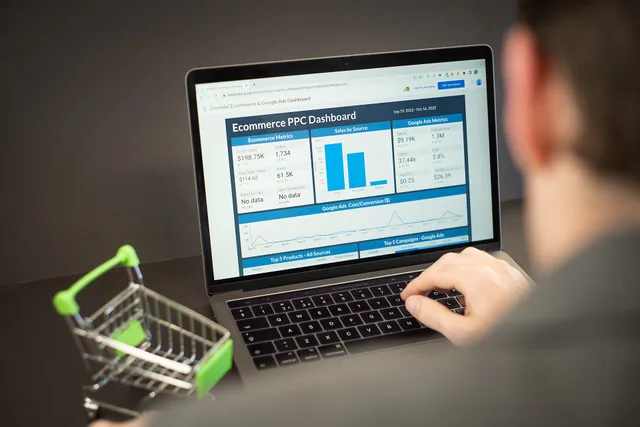
Reviews - Ecommerce conversion reporting dashboard: specification
Specify an ecommerce conversion reporting dashboard with a defined conversion rate, reconciled order states, data-quality queues and correction controls.
Measurement - Conversion ROI stays blank until the cost is whole and the uplift is causal
Calculate ecommerce conversion ROI only from reviewed whole-life cost, causal incremental contribution, uncertainty and retained order states.
Costs and pricing - Ecommerce conversion reviews: a screening method
Ecommerce conversion reviews need a clear screening method: build supplier dossiers, test synthetic journeys and keep stop gates independent.
Reviews - How to rehearse one ecommerce conversion risk scenario, field by field
Rehearse one ecommerce conversion risk scenario for an England store: write the record, set the trigger, contain, recover and keep rollback evidence.
Outlook - Ecommerce conversion software selection: the acceptance test
Run a bounded acceptance test of ecommerce conversion software for an England store: predeclared cases, data checks, an exit rehearsal and a clear verdict.
Tools and providers - A store conversion plan built on a defined journey and predeclared stop rules
Build an England store conversion plan around a defined journey, protected customer choices, comparable evidence and predeclared stop rules.
Strategy - Auditing a live conversion change for strategy mistakes
Audit a live ecommerce conversion change for strategy mistakes: seven checks, the evidence to pull for each and the UK rule behind it, before the next release.
Strategy - Comparing conversion procurement routes on one evidence grid with no universal winner
Compare conversion procurement routes on one England store job, identical evidence fields, blank commercial assumptions and no universal winner.
Tools and providers - Four survey routes for store research, held to one dated evidence grid
Compare store journey survey routes through a dated evidence grid covering privacy, security, accessibility, export, deletion, support and cost.
Audience research - Defining a store research audience from the decision event outwards
Define an England store research audience through recent journey evidence, clear roles, safe recruitment, denominators and decision-specific limits.
Audience research - Who owns what in a conversion change, from merchant decision to reconciliation
Assign non-ranked ecommerce conversion responsibilities using current UK role boundaries, explicit evidence ownership and independent stop authority.
Operations - Ecommerce conversion tool implementation: tags, consent and six release gates
How to implement an ecommerce conversion tool: tool categories, tag and consent set-up, a segregated test, six independent release gates and a rollback plan before connecting a store tool.
Tools and providers - Selecting conversion suppliers by one store job, one dossier and independent risk gates
Select ecommerce conversion suppliers by one defined store job, current evidence, controlled acceptance, independent risk gates and a tested exit.
Tools and providers - Ecommerce conversion UK regulations: store release gates
Ecommerce conversion UK regulations — the DMCCA 2024, PECR and the Consumer Contracts Regulations 2013 — mapped to store journey release gates.
Rules and ethics - Mapping UK conversion rules to each store decision with separate review gates
Map UK ecommerce conversion rules to each store decision, with separate consumer, advertising, privacy, safety and supplier review gates clearly.
Rules and ethics - Vetting a conversion supplier's identity, data roles and exit before you buy
Investigate a conversion supplier's identity, exact service, data roles, security, customer effects, commercial terms and workable exit before purchase.
Tools and providers